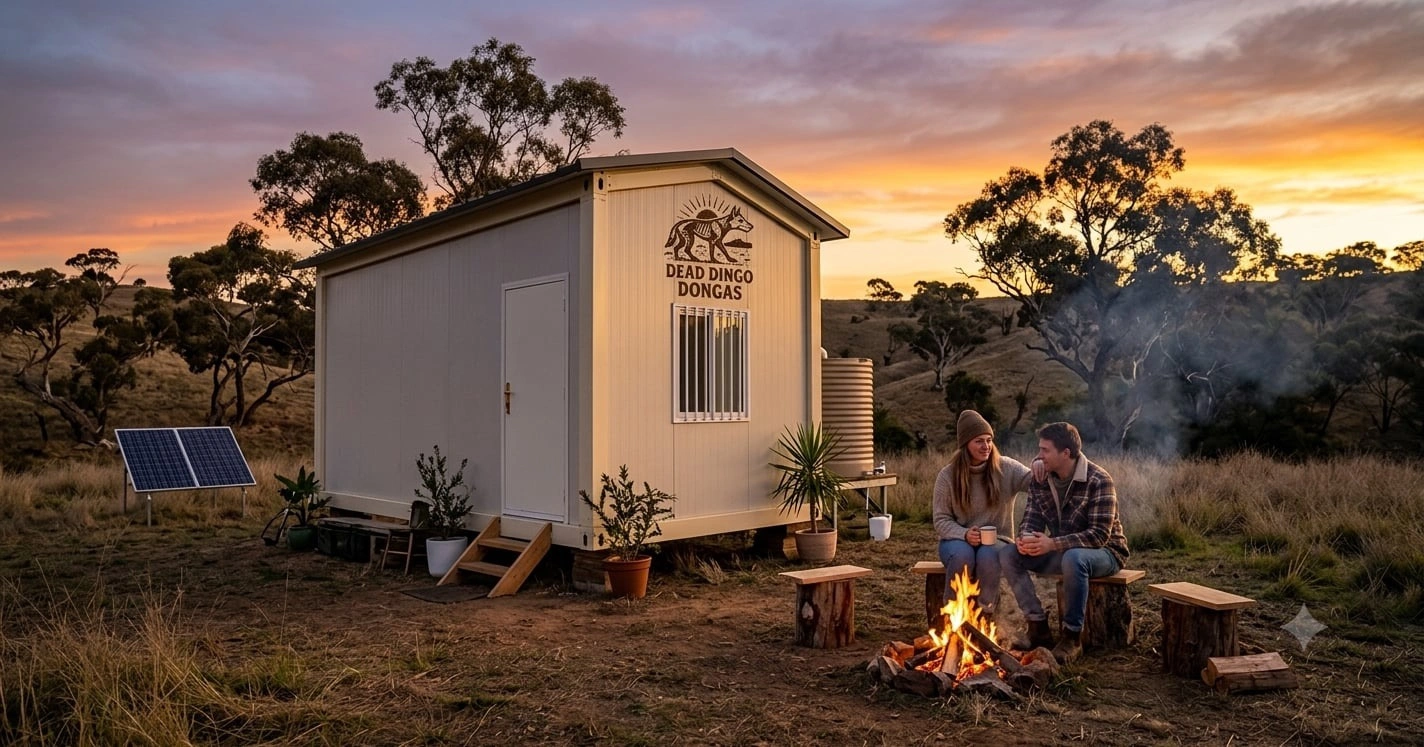
What Is a Donga in Australia? The Plain-English Answer
A donga is a transportable, insulated building used as a shed, workshop or extra room. Here's what it is, where the name comes from, and how to get one without a slab.
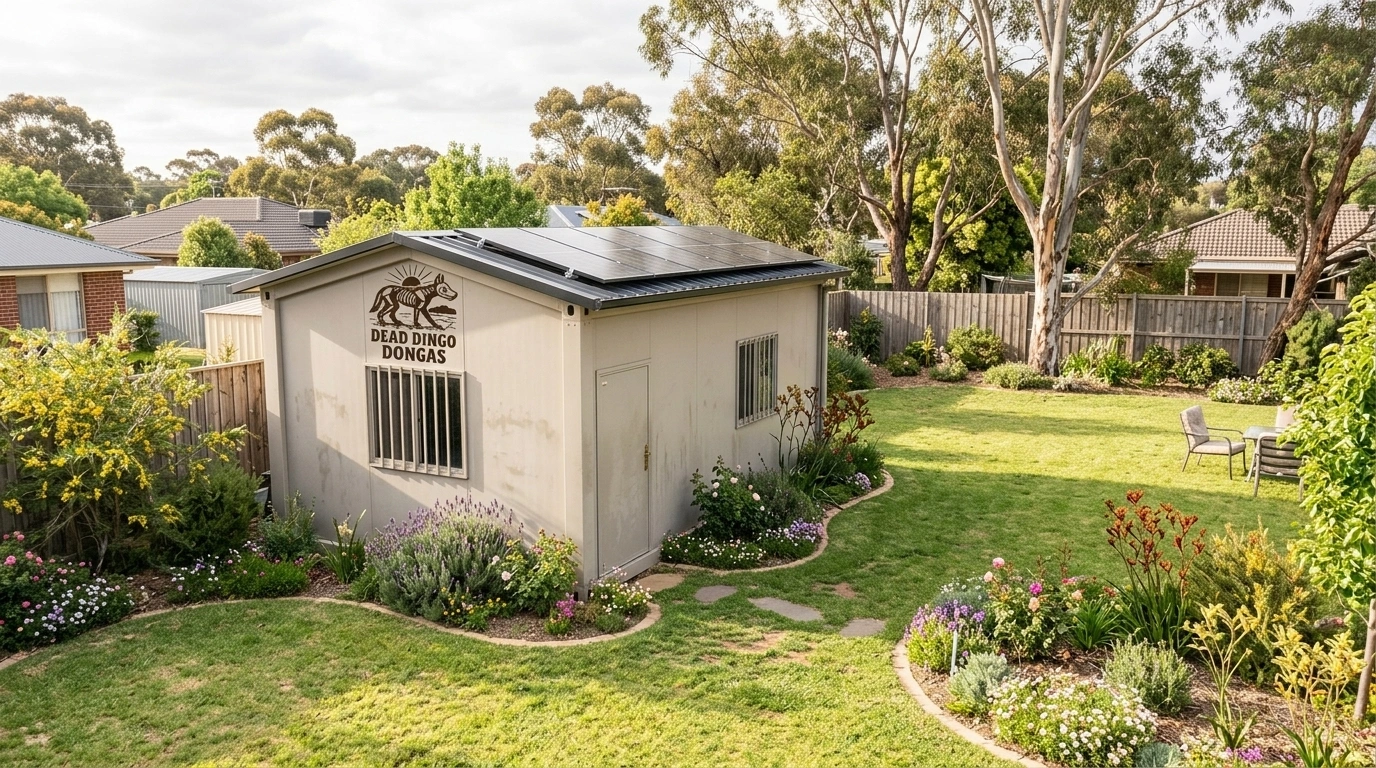
What Is a Donga in Australia? The Plain-English Answer
A donga is a transportable, fully insulated building. In plain terms, it's a sturdy box you can drop on your block and use straight away as a shed, a workshop, a studio or an extra room. No slab. No fuss. You've probably heard the word thrown around on a job site, at a mate's place out west, or while scrolling for "a shed I can actually afford" - and wondered what the hell it really means.
This is the no-jargon answer.
What Is a Donga in Australia?
A donga is a relocatable, insulated structure - usually steel-framed and clad - that arrives as a kit and gets used as a practical outbuilding or non- living space (legally). Think garden shed crossed with a small room: four solid walls, a roof, a floor, and insulation so it doesn't cook you in January or freeze you in July.
Traditional dongas were the portable huts used on mining sites and remote camps. Workers slept in them, ate in them, and stored gear in them. They had to be tough, movable, and able to handle everything the bush threw at them. That same idea has since made its way into backyards across NSW and south east QLD - where homeowners want the durability of a site donga without the industrial look or the industrial price.
Where Does the Name "Donga" Come From?
Honestly? Nobody's certain, and anyone who tells you otherwise is bluffing.
The word turned up in Australian English in the early 1900s and is widely thought to have come from an Aboriginal language, most likely meaning a shelter, camp or rough hut. From there it spread through the outback, then the armed forces, then the mining boom - and stuck. Today "donga" is just the word Australians use for a portable, hard-wearing building. ........... not to be confused with donger which has another totally different meaning and often used in the saying "Dry as a Dead Dingo's donger"......... think you get the drift.
If you've heard it used for a small yard shed, an office on a construction site, or worker accommodation in the Pilbara, that's all the same word doing the same job: a practical box you can move.
What Do Aussie Homeowners Actually Use a Donga For?
This is where it gets useful. A donga isn't a one-trick pony. In a suburban or rural backyard, people are using them as:
A garden shed - mowers, tools, bikes, and everything that's currently tripping you up in the garage.
A workshop - a proper insulated space for the bench, the welder, and the project car.
A studio or office - somewhere quiet to work, paint, or run a side hustle away from the house.
An occasional guest room or teen retreat - with a full floor and insulation, it's not legally habitable habitable, but fr more comfortble and practical than a tent.
Storage and overflow - the classic "where does all this stuff go" problem, solved.
The common thread: people want space that's weather-ready and doesn't require them to build the thing from the ground up.
How Is a Donga Different From a Regular Shed?
A regular shed is often a tin box on a concrete slab. You pour the slab first, wait for it to cure, get the shed delivered, then assemble it - and if you're in NSW, you may be looking at council paperwork depending on the size.
A donga-style building flips that order. It's insulated, it comes with its own raised floor, and it doesn't need a slab underneath it. You prep the site, drop it, and it's ready. That means:
No concrete pour - and no waiting weeks for it to cure.
No slab cost - which is often the single biggest line item on a backyard build.
Insulation included - so it's usable year-round, not just in mild weather.
A raised floor - off the ground and out of the damp.
That's a very different proposition from a flat-pack tin shed.
Do You Need Council Approval for a Donga in NSW?
This is the question that stops a lot of people before they even start - and for many backyard structures, it doesn't have to.
In NSW, structures under 20m² can be exempt from council approval, depending on how they're used and sited. That covers a lot of garden shed and workshop projects. It's not a blanket free pass for every situation, so check your own block, use, and local rules - but the point is this: a smaller donga-style shed often sidesteps the application process entirely.
That's the whole appeal. No council application in NSW for structures under 20m², no slab, no drawn-out approvals - just a solid, insulated building where you need it.
What About Weather, Insulation and Site Prep?
A donga earns its keep because it's built for Australian conditions. Fully insulated walls and roof mean the space stays usable when the mercury climbs past 40 or drops on a cold morning. A raised full floor keeps the interior dry and off the ground. Steel framing and tough cladding handle sun, wind, and a decent downpour.
As for site prep, that's the trade-off that keeps the price sane. You handle the prep - a level, clear, well-drained spot - and the kit does the rest. No concrete, no crane, no drama. If you can level a patch and follow a plan, you're most of the way there.
How Much Does a Donga Cost, and How Do You Get One?
Donga pricing depends on options, and how far it has to travel. Because there's no slab and no council application, you're cutting two of the biggest costs off a standard backyard build before you've even compared products.
Delivery matters too. Buying from a supplier that ships out of Sydney and Brisbane - keeps shipping predictable whether you're in the Hunter, Northern NSW, or south east QLD.
The Bottom Line
A donga is simply a transportable, insulated building - a practical answer to "I need more space, and I don't want to pour a slab or fight the council for it." The name has been kicking around Australia for a century, but the idea hasn't changed: tough, flexible, and built to be used.
If that sounds like what you're after, the Ultimate Aussie Garden Shed Kit is exactly that - a heavy-duty, fully insulated shed kit with a full raised floor included, one window and one single door, and optional extras if you want them. It ships Australia-wide from Sydney and Brisbane, and at under 20m² it's exempt from NSW council approval.
No slab. No application. Just a shed that's ready to work.