Donga Shed Kit Without a Slab: NSW and SE QLD Setup Guide
Skip the concrete truck and skip the council wait times! If you want to add a sturdy, insulated structure to your backyard, a Donga Shed Kit with a raised floor is the faster, smarter, and cheaper way to build.
Oct 9, 2026
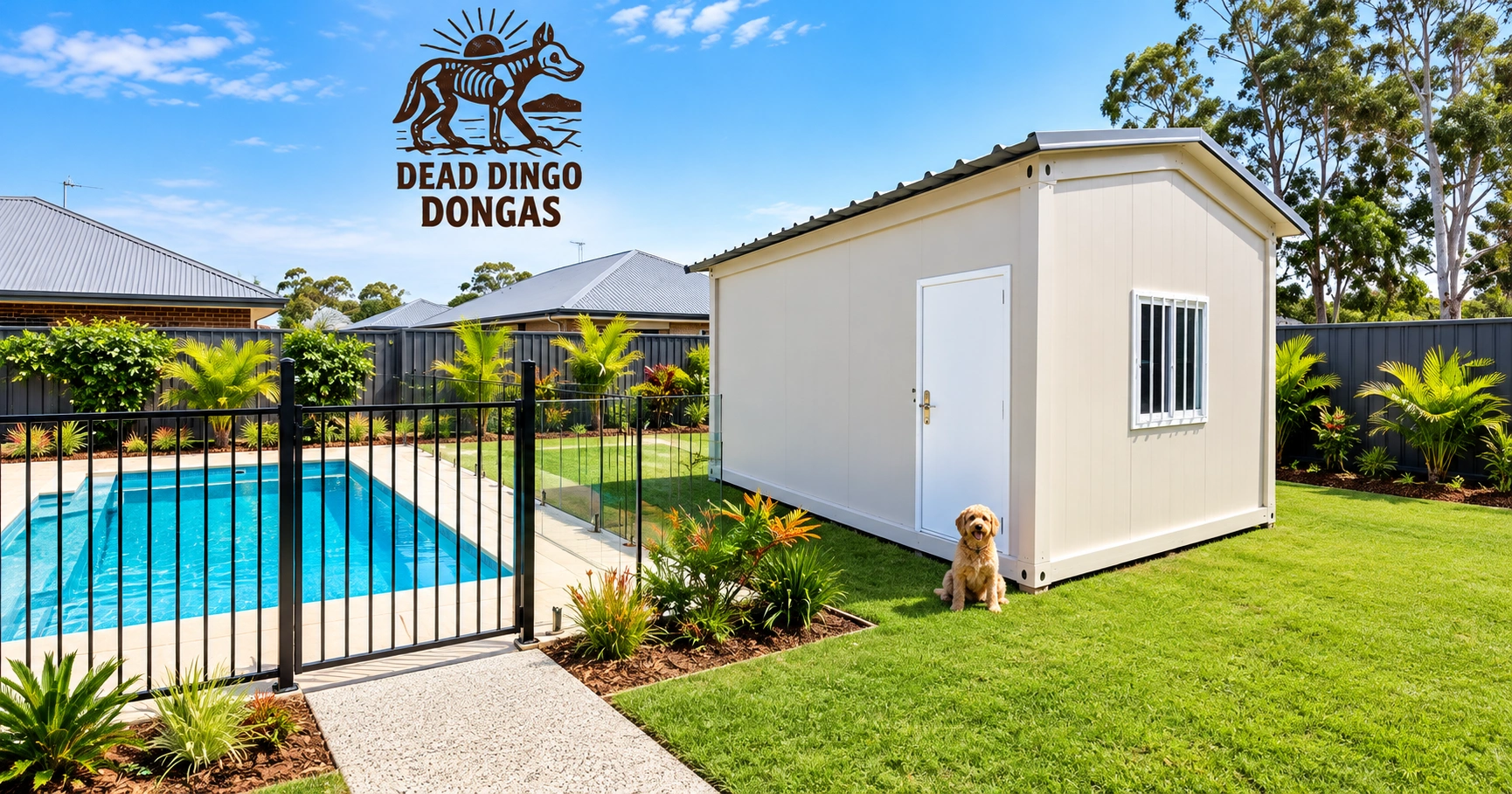
Donga Shed Kit Without a Slab: The No-Council-Approval Setup Guide for NSW
Most backyard sheds come with two hidden costs people only discover halfway in: a concrete slab, and a council application. A donga shed kit is built to skip both. Here is exactly how to pick a spot, prep the ground, and stand up a fully insulated kit with its own raised floor - no slab, no concrete truck, and no council application in NSW for structures under 20m2.
What is a donga shed?
A donga is the Aussie name for a sturdy, relocatable structure. The name comes from remote mine sites and work camps, where buildings had to be tough, insulated, and shiftable. The same build logic is now landing in suburban backyards.
Three things separate a donga shed from a flat-pack garden shed:
Rigid insulated panels instead of thin single-sheet walls, so it holds temperature in summer and winter.
A full raised floor is included, which means the structure never touches the ground directly.
A heavy-duty frame rated for real weather, not just a light dusting of rain, to keep you dry as a dead dingo's donga
That second point is the one that kills the slab. As the floor comes with the kit, you do not need a poured concrete base under it.
Why slab-free is the whole point
A concrete slab means excavation, formwork, a pour, and cure time before you can build anything on top. It also usually means engaging a concreter, because getting a slab wrong is expensive to undo.
Skip the slab and you remove:
The concrete and labor cost.
The waiting time while it cures.
The drainage work a slab forces you to plan around.
Then there is the paperwork. In NSW, structures under 20m2 are exempt from council application - no development application, no approval fees, no months of waiting. That is the single biggest reason our buyers choose a kit over a traditional shed build. If you are in south east QLD, rules differ by council, so confirm the size limits and setbacks with your local council before you order.
Step 1: Pick the right spot
Before you order anything, walk the block and answer four questions.
Setbacks. How close can the shed sit to your fence and side boundaries? Check your council's limits - in NSW the exempt-development rules for a structure under 20m2 still carry placement conditions.
Access. Can a delivery truck reach the spot, and can you carry panels from there? A kit is easier to move than a concrete truck, but you still need a clear path.
Drainage. Pick ground that sheds water away from the shed, not toward it. Sitting in a puddle means walking mess into the Donga but at least you will be high and dry inside..
Sun and use. A workshop you use in the afternoon wants shade. A studio or storage shed does not care much.
Step 2: Prep the site without a pour
This is the part that worries people most, and it is the part that is genuinely easy.
Clear the four corner pier areas of grass, rocks, and soft topsoil, then get it level. The rule is simple: flat and firm beats perfect. A compacted layer of crushed rock or road base under each bearer line gives you a stable, free-draining pad that will not move.
You do not need to dig footings, box up formwork, or wait for concrete. You do need to make sure the ground is not going to settle under one corner and not the others.
In the case you wish to locate your donga on a pronounced slope this now becomes an economical option using raised corner piers for the lower levels. Remember the higher above ground the pier the deeper it must go into the ground ( we suggest you consult experts on the details).
A few practical notes:
Compact in layers rather than dumping one thick mound.
Keep the pad wider than the shed footprint so water runs away from the bearers.
Check the pad with a long spirit level or a straight edge before you start assembling.
Step 3: Set the raised floor
A full raised Mgo floor is included with the kit, which is placed on a full steel base frame. Assemble this frame on your prepared pad, check it for level and square, and lock it together. Packers can be used for final levelling.
Keeping the structure clear of the ground does two jobs. It stops moisture wicking up into the floor, and it gives you airflow under the shed - the same trick that has kept dongas serviceable in harsh country for decades.
Step 4: Assemble the insulated shell
A bare-shell kit runs about 1,100 kg supply-only, so plan for two or three people over a weekend rather than one person over a month. Work in this order:
Set the frame and floor, checking square as you go.
Fix the insulated wall panels, working around the openings.
The walls create bracing as you build - so always fit walls before the roof panels.
Put the roof on with as much of the shell closed in as possible.
Insulated panels are light enough for two people to handle, but they are big. Do not fight the wind with a panel you cannot control.
Step 5: Fit the window and door
Each kit includes one window and one single door, with optional extras available if you want more light, a wider opening, or additional ventilation. Fit the wall containing door last so you are not carrying panels through a finished doorway all weekend.
What you actually save
Compare a kit like this to a slab-built shed and the difference is not just dollars - it is sequence. No concreter to book. No cure window. No development application in NSW under 20m2. No waiting on a tradesperson's calendar before you can start.
You do the site prep yourself, you own the timeline, and you end up with a fully insulated, weather-ready structure instead of an unlined box.
Delivery
Kits dispatch from Sydney and Brisbane and AJ Magnays in Lismore , NSW. That means shorter freight runs, and less chance of your panels spending a week on a truck when you are ready to build.
The bottom line
A donga shed kit without a slab is not a compromise - it is the faster, cheaper, and less bureaucratic way to get a real backyard structure. Insulated walls, a full raised floor, and a build you can finish in a weekend, without a concrete pour and without a council application in NSW for anything under 20m2.
Pick your spot, level your pad, and start building. The Ultimate Aussie Garden Shed Kit comes supplied and ready to assemble - you bring the site prep and the people.